

The Case of Babymetal: Negotiating Authenticity and Diversity
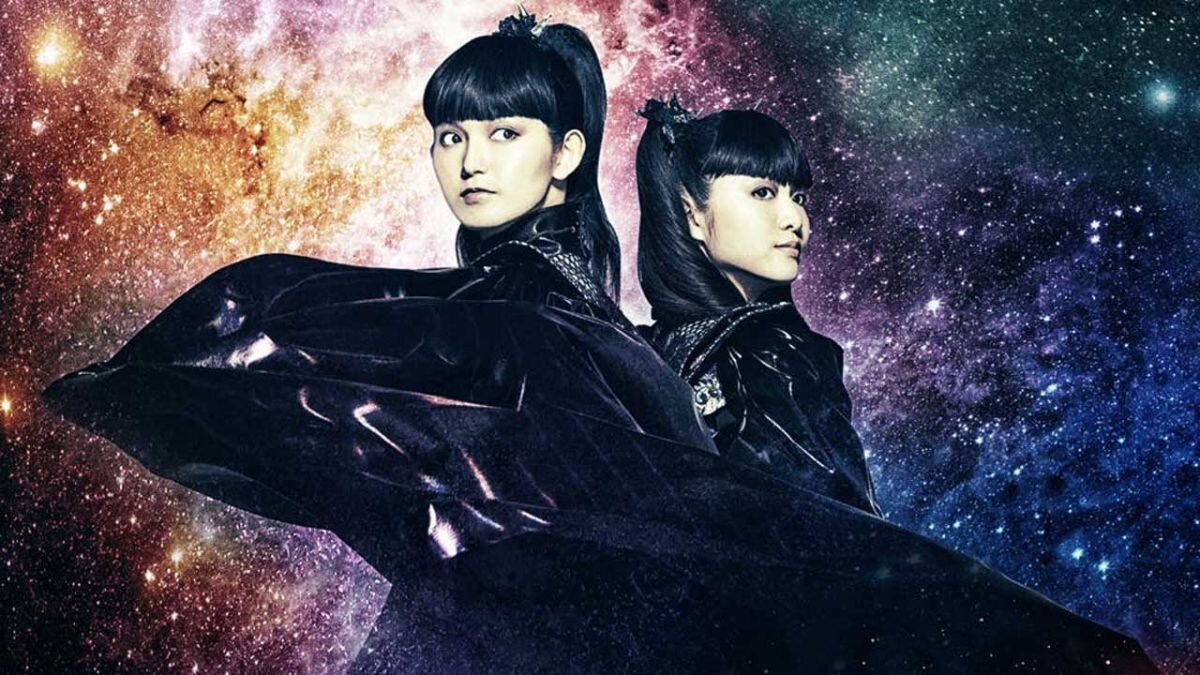
If you haven’t heard the name of this Japanese band by now, you have three albums to catch up on, the last one (Metal Galaxy) released less than a year ago. Formed in 2010 by three young women, Babymetal connects the worlds of Japanese pop (J-pop) and heavy metal, of ‘cuteness’ and aggression, of idol culture and its subversion; all within a genre they call kawaii metal [1]. Besides presenting a strikingly new, hybrid sound, the trio – currently duo- and the mixed reception of their work provide a potent ground of theorizing the negotiations of authenticity and diversity among metal fans today. With a few exceptions [1], however, it appears that the Western academia has not yet caught onto the case, despite the group’s global appeal confirmed by their World Tours and 2019 top position on Billboard’s Top Rock charts (as the first Asian group in history) [2]. While metal fanbases question whether Babymetal can be qualified as metal at all and whether it is “authentic”, we can in turn ask: what do such questions reveal about the “rockist ideology” [3] in its diversifying transition of the modern age?
Disclaimer: The contents and opinions of this blog post do not represent the views or values of Honours Review as a publication.
If you haven’t heard the name of this Japanese band by now, you have three albums to catch up on, the last one (Metal Galaxy) released less than a year ago. Formed in 2010 by three young women, Babymetal connects the worlds of Japanese pop (J-pop) and heavy metal, of ‘cuteness’ and aggression, of idol culture and its subversion; all within a genre they call kawaii metal [1]. Besides presenting a strikingly new, hybrid sound, the trio – currently duo- and the mixed reception of their work provide a potent ground of theorizing the negotiations of authenticity and diversity among metal fans today. With a few exceptions [1], however, it appears that the Western academia has not yet caught onto the case, despite the group’s global appeal confirmed by their World Tours and 2019 top position on Billboard’s Top Rock charts (as the first Asian group in history) [2]. While metal fanbases question whether Babymetal can be qualified as metal at all and whether it is “authentic”, we can in turn ask: what do such questions reveal about the “rockist ideology” [3] in its diversifying transition of the modern age?
“Rockism” has been described by Philip Auslander, a prolific performance studies scholar, as the rock-centric ideology defining authenticity in popular music. As described in his book Liveness, rock culture establishes its authenticity through dismissing or Othering the inauthentic “pop” products of the music industry: the music that does not tick the boxes of “instrumental virtuosity, original songwriting, social criticism, a stance of anger/alienation”, and primarily, of liveness embedded in the believable “spontaneity” of rock iconography. [3]
Although its aggressive guitars and rapid drums might sometimes make the instrumentals of Babymetal sound hardly distinguishable from its Western metal counterparts, the lyrics, performance, and background of the band prove questionable to anyone assessing them with the rockist lens. The elements criticized most frequently are Babymetal’s association with the (often exploitative) idol industry and produced mainstream popular music more broadly. A number of commenters on metal forums have claimed the band to be “mediocre, barely even. Total manufactured”, an “irritating cashgrab”, “overproduced, soulless modern crap” [4]; while others, including the metal vocalist Rob Zombie and KORN frontman Jonathan Davis, defended Babymetal (“They roll harder than you” [5]; “I thought I'd seen it all, but after I saw them, like, 'Wow! This is pretty intense.'” [6]). In the meantime, some hail the duo as “feminist role models” [7] (with lyrics that “engage with messages of positivity and self-empowerment – especially as they concern girls and young people more generally” [1]) and an opportunity for the positive racial-ethnic diversification of the genre.
Bashed or supported, the discourse surrounding Babymetal encompasses the spectrum of old rockist ideologies of authenticity and today’s increased importance of representation. The questions posed towards the band reflect wider issues that the originally Western-male genres such as metal face in the times when diversity comes to the fore, and when elitist stances of the past are called into reconsideration. However, the discussion is more problematic and complex than what is has often been reduced to: namely, open-minded metal fans versus, in Rob Zombie’s blunt phrasing, “grumpy old f*cks” [5]. While it is certainly true that Babymetal’s image is empowering in terms of their alternative expressions of femininity and the ways they subvert the Western rockism with J-pop influences, the duo remains tied to the Sakura Gakuin idol group and the Amuse talent agency, produced entirely by Key ‘Kobametal’ Kobayashi, with the overwhelming majority of the lyrics and the music not written by the girls, who state clearly that they had no interest in metal prior to forming the band [8]. The concern of possible “inauthenticity” might hence intersect with or diminish the values of “diversity” and subversion. If the duo doesn’t write its own songs, how feminist are their lyrics really? If their artistic direction was determined mainly by capitalist commercial necessities, how non-conformist can it get- and how exploitative could it potentially be for the young girls involved?
Similar questions are often posed in regards to the Western pop music industry, pointing to what Auslander and others called the romantic rock ideology becoming adapted to all popular music [3]. The distinction between art and commerce, apparent in the firm high/ low culture boundaries of the past, has not disappeared completely and continues to be based on whether the primary drive of the music creation is “art for art’s sake” or a function such as entertainment or sales [9]. The combination of a genre normally associated with rockist “authenticity”: metal with the openly produced, commercial J-pop idol culture is bound to spark controversy. However, the mass success Babymetal has been experiencing by far can prove that the discourses of rock/ metal authenticity in its traditional meaning, albeit still alive, are not essential to most (even Western) audiences anymore. Rockism has entered its transitional period, and arguably, nowadays it might be representation, empowerment, and subversion of conventions (in both sound and performance) that encourage listeners to value bands; whether they ‘write their own songs’ or not.
References
[1] Plourde, Lorraine. “Babymetal and the Ambivalence of Cuteness.” International Journal of Cultural Studies, vol. 21, no. 3, May 2018, pp. 293–307.
[2] Rutherford, Kevin. “Babymetal Becomes First Asian Act to Rule Top Rock Albums Chart”. Billboard, October 2019. Retrieved from https://www.billboard.com/articles/business/chart-beat/8540112/babymetal-metal-galaxy-no-1-top-rock-albums.
[3] Auslander, Philip. Liveness: Performance in a Mediatized Culture. Routledge, 1999.
[4] Metal-fi. “BABYMETAL: Good, bad, or holy hell?”. Retrieved from http://www.metal-fi.com/forum/viewtopic.php?f=7&t=434&sid=00661afb997adc299191e3079912a2a0.
[5] Brooks, Mike. “Only Grumpy Old Fucks Could Be Mad about J-Pop Metal Band Babymetal”. Dallas Observer, September 2019. Retrieved from https://www.dallasobserver.com/music/is-babymetal-the-future-of-heavy-metal-11764339.
[6] Blabbermouth. “KORN Frontman Says BABYMETAL Is 'Entertaining As Hell,' Calls Japanese Band's Critics 'Closed-Minded'”. Blabbermouth.net, August 2017. Retrieved from https://www.blabbermouth.net/news/korn-frontman-says-babymetal-is-entertaining-as-hell-calls-japanese-bands-critics-closed-minded/.
[7] Asencio, Jenny. “5 Rational Feminist Role Models in Pop Culture”. Medium, January 2018. Retrieved from https://medium.com/@jennyasencio/5-rational-feminist-role-models-in-pop-culture-74844b423cba.
[8] Robson, Daniel. “Babymetal: 'I've never been in a moshpit. I think I'd get smashed to bits'”. The Guardian, November 2014. Retrieved from https://www.theguardian.com/music/2014/nov/07/-sp-babymetal-interview-japanese-metal-pop.
[9] Frith, Simon. Performing Rites: On the Value of Popular Music. Harvard University Press, 1996.

Underground music: a genre, a statement, or a judgement?
Whether online, in record stores, in music magazines, awards, or even daily fan conversation, the terms such as “underground” and “alternative” are increasingly used for the classification of music releases. Either used in combination with other genres to describe a certain music style (“alternative rock”; “underground dance music”) or even functioning on their own, the underground and alternative are understood as self-evident by many. The common definition is simple: alternative/ underground is simply not a part of the mainstream. In academia, however, as early as 1996 popular music genres (as a whole) were called under scrutiny for their unstable boundaries, constructed, marketing-oriented and agreement-based nature. [1] As umbrella terms often encompassing a variety of genres based on broad criteria, the terms “underground” and “alternative” can be questioned even more so.

Disclaimer: The contents and opinions of this blog post do not represent the views or values of Honours Review as a publication.
Whether online, in record stores, in music magazines, awards, or even daily fan conversation, the terms such as “underground” and “alternative” are increasingly used for the classification of music releases. Either used in combination with other genres to describe a certain music style (“alternative rock”; “underground dance music”) or even functioning on their own, the underground and alternative are understood as self-evident by many. The common definition is simple: alternative/ underground is simply not a part of the mainstream. In academia, however, as early as 1996 popular music genres (as a whole) were called under scrutiny for their unstable boundaries, constructed, marketing-oriented and agreement-based nature. [1] As umbrella terms often encompassing a variety of genres based on broad criteria, the terms “underground” and “alternative” can be questioned even more so. If the core nature of such music styles lies in their implicit or explicit opposition to mainstream music rather than any similarities of conventions, technical elements, or instrumentation, then defining the underground/ alternative becomes nearly fully extramusical: based on the context, politics, or values that the bands choose to communicate. Where are the borders of the underground/ alternative music world and what requirements one needs to fulfill to qualify? Where is the mainstream in music? Despite the simplicity of its broad definition, the underground/alternative music remain contested categories, described as carrying a variety of implications by various scholars and critics; and often bands become described by alternative based on radically different or even increasingly contradictory sets of rules.
The underground as obscure
One possible difference between the underground and the mainstream music styles lies simply in the reach they have. The alternative is not supposed to be readily available, supported by the mainstream media or concerting in large arenas: it would rather be small-scale in both production and distribution, limited to the dedicated fans who found it through own searches or by recommendation. While this appears to be clear-cut enough, the emergence of online media blurred the distinction. Asking “Where is the musical underground in 2017?”, The Guardian described that the definition of the underground as “music that – by default or design – existed on the margins, with the bare minimum of exposure in conventional media” such as radio and TV was functional historically. [2] Nowadays, however, it is YouTube and social media which “are infinitely more important in promoting music and anyone can upload to them”. [2] While access to alternative/ underground music is certainly easier in the internet era, we must not make the mistake of erasing obscurity from the markers of this umbrella genre. Among others, the readily available radio/ Billboard charts, the trending section of YouTube or curated Spotify ‘hit’ playlists continue to play a role in boosting the popularity of chosen musical styles and their most well-known representatives. If those channels would be regarded the modern mainstream distributors, it would still be possible to say that underground music has less obvious media presence and can be rather found in more obscure (although still easily accessible with a click) areas of the internet (personal blogs, forums, or smaller personal playlists for instance). Effectively, it might be not the accessibility of the internet that puts the “obscure alternative” into question; but rather, the popularization of such music styles. With self-named “alternative” frequently making it into the radio or Billboard charts and popular awards such as Grammy mainstreaming the Best Alternative Music Album winners, one can ask whether (as Mark Fisher argued) under late capitalism “'alternative' and 'independent' don't designate something outside mainstream culture; rather, they are styles, in fact, the dominant styles, within the mainstream”. [3]
The underground as counterculture
In addition to their obscure nature, early definitions of underground frequently contained elements of independence from the cultural industry, rebellion, or counterculture. Kai Fikentscher described the term as “denoting a context in which certain activities take place out of a perceived necessity for a protected, possibly secret arena that facilitates opposition, subversion, or delimitation to a larger, dominant, normative, possibly oppressive environment” [4], Stephen Graham mentioned “principles of improvisation and outsider DIY organization and politics” [5] as distinguishing the underground, and The Guardian placed “cosying up to big business” and deals with the cultural industry at odds with the values of alternative music [6]. To many, listening to the underground continues to mean a statement of resistance: whether to the political system, the dominance of the Big Three labels (Universal, Sony, Warner), or the formulaic pop conventions. Yet, it would be a mistake to equate the underground/ alternative with counterculture: a simple search for definitions online yields results that confuse this distinction as well. The diversity of genres included by it ranges from the inherently political anarcho-punk/ riot grrrl/ queercore born from marginalized groups to the decidedly apolitical or even associated with high art genres such as math rock/ progressive rock/ free improvisation. While the latter group can still be seen as rebellious in a way (towards simplicity and the accepted conventions of popular music, in this case), few common elements can be identified between the two. Finally, “independence” of alternative is not free of doubts either: coming back to The Guardian’s guide, today instead of the major labels “brands have colonised the world of non-commercial music”- a large part of the ‘underground’ is becoming commodified. [6]
The underground as… elitism?
Lastly, it is necessary to question the value judgements carried (often perhaps subconsciously) in the classifications of underground and alternative music. Besides the counterculture element, Stephen Graham pointed to “aesthetically challenging or complex” as a distinguishing quality of underground music [5], and the research by Gamaliel Percino, Peter Klimek, and Stefan Thurner supported a correlation between the decreasing ‘instrumentational complexity value’ and increasing sales of music styles [7]. Within the underground communities, one can often find a pressure for “originality” and “authenticity” regarded as the markers of music quality. Those constructed terms are sometimes what leads to the perception of the underground as “better” or more “art-like”, echoing the privileging of Boltanski and Thevenot’s Inspired Value world (the principle of creativity as crucial in art) [8] and the XIX century expressive individualism (the cult of artist as a genius) [9]. While this is certainly not true for every underground music fan, often the “alternative” genre prefix signifies a mildly elitist tendency to detach from the core culture perceived as too well-known/ commercial - as such, it might be means to elevate oneself above the tastes of the majority: to the domain of art that cares about the ‘real’ artistic expression first and foremost.
Conclusion
With the variety of possible classifications and blurred boundaries between the underground and the mainstream, dubbing a band “alternative” is a construct carrying a lot to be unpacked. From expressing obscurity and rebellion to a veiled value judgement, underground music styles have different levels and certainly are not homogeneous. All in all, how one chooses to describe their music on the line between alternative and mainstream might tell you more about their extramusical priorities than their music taste. When dealing with the ‘underground’ or ‘alternative’ music then, it is always interesting to ask: what does calling this band “underground” really imply?
References
Frith, Simon. Performing Rites: On the Value of Popular Music. Harvard University Press, 1996.
Petridis, Alexis. “Where is the musical underground in 2017?”. The Guardian, 2017. https://www.theguardian.com/music/ng-interactive/2017/oct/09/where-is-the-musical-underground-in-2017.
Fisher, Mark. Capitalist Realism: Is There No Alternative?. Zero Books, 2009.
Fikentscher, Kai. "You Better Work!": Underground Dance Music in New York. Wesleyan University Press, 2000.
Graham, Stephen. Sounds of the Underground: A Cultural, Political and Aesthetic Mapping of Underground and Fringe Music. University of Michigan Press, 2016.
Aroesti, Rachel. “No alternative: how brands bought out underground music”. The Guardian, 2017. https://www.theguardian.com/music/ng-interactive/2017/oct/16/no-alternative-how-brands-bought-out-underground-music-timberland-red-bull.
Percino, Gamaliel et al. “Instrumentational Complexity of Music Genres and Why Simplicity Sells”. PLOS One, 2014.
Boltanski, Luc and Thévenot, Laurent. On Justification: Economies of Worth. Translated by: Catherine Porter. Princeton University Press, 2006.
Madigan, Patrick. “Expressive Individualism, the Cult of the Artist as Genius, and Milton's Lucifer”. The Heythrop Journal, vol. 54, no. 6, 2013.

All was no longer well: Fix-it fanfiction through the years (Part 1)
“The scar had not pained Harry for nineteen years. All was well.” [1] Chances are, you remember quite well when and where you read this sentence for the first time. It might have marked the end of the Harry Potter-era, but started a seemingly endless supply of fix-it fic: fanfiction that addresses a – according to the author – unfathomable error in the original work and tries to set it straight. Especially the final Harry Potter book has lead to an innumerable amount of such works. Yet, Harry Potter is far from the only franchise inspiring fanfiction writers all over the world to fix their predecessor’s errors. How has this genre developed over the years?

Disclaimer: The contents and opinions of this blog post do not represent the views or values of Honours Review as a publication.
“The scar had not pained Harry for nineteen years. All was well.” [1] Chances are, you remember quite well when and where you read this sentence for the first time. It might have marked the end of the Harry Potter-era, but started a seemingly endless supply of fix-it fic: fanfiction that addresses a – according to the author – unfathomable error in the original work and tries to set it straight. Especially the final Harry Potter book has lead to an innumerable amount of such works. Yet, Harry Potter is far from the only franchise inspiring fanfiction writers all over the world to fix their predecessor’s errors. How has this genre developed over the years?
Back in the days
The term ‘fanfiction’ first emerged in 1939, though it was then still used for amateur science fiction stories. It did not acquire its current meaning until the 1960s, when fan-written stories started appearing in so-called fanzines: magazines produced by fans of a certain franchise, notably Star Trek. Despite the fact that the term is relatively young, the concept of fanfiction is anything but. Coming up with new stories inhabited by characters and places from existing literary worlds is probably as old as the art of storytelling itself. Before the fan-age, these would simply be called ‘unofficial sequels’ or ‘pastiches’. Long before the internet or even fanzines would emerge, people wrote and read countless unauthorized stories set in the worlds of Sherlock Holmes or Jane Austen’s novels. But the oldest fanfictions we still know today are probably the Iliad and the Odyssey, as long as you believe in the theory that Homer wasn’t one guy, but instead a collective (in which case you might still debate the rather vague boundaries between using legends as source material and ‘actual’ fanfiction). And even then we’ve probably not reached the beginning: fanfiction most likely has its roots in the oral tradition. [2]
Whatever its exact history may be: an ages-old storytelling phenomenon suddenly got a name halfway through the last century. This had everything to do with the new-found concept of copyright. Now not only the works were appreciated as copyrighted material, but also their characters and the world in which the story takes place. Apparently this gave rise to a need to distinguish stories that make use of these pre-existing elements from stories that uses a more original setting. [2]
But did these early fanfictions also count as fix-it fic? In order to answer this question, we will need a solid definition first. Seeing as every fanfiction already changes something about the original work, fix-it fic must have some special quality to the change. I argue that this has everything to do with intent: someone writing fix-it fic will have one main goal, namely set straight something that they think is not right in the original work. That does not seem to be the case for the works in Spockanalia, generally considered to be the earliest source of written fanfiction. [3] The stories here are more like ‘unofficial sequels’ like those long before them: stories that add to the universe of the original work, without changing what happens in the canon[1] work itself.
Later the Star Trek-fandom would produce one of the fundamental parts of modern fix-it fic: slash fiction, which is fanfiction focusing on romantic and/or sexual relationships between characters of the same sex. This didn’t happen in Spockanalia (which is somewhat regrettable, given the title), but in 1974 in the fanzine Grupi. [3] Slash fiction would only be considered to be fix-it fic is the author of the fanfiction deems the choice not to bring these characters together in the original work to be a mistake. Although same-sex relationships have become increasingly more common in the different media types that usually inspire fanfiction writers, it took a long time to get there. Fanfiction has for a long time served as an important platform for both the telling and consummation of queer stories within our storytelling culture, especially when these places were scarce in the more mainstream original works. But not all slash fiction inherently belongs to this category: some has just been written because there is an audience for it, or simply because the author thought it would be interesting to write about an improbable couple.
Fanfiction in the internet age
Fanfiction might precede the internet, but it could not grow to the global phenomenon it is now without it. Where before fan stories could only be shared on a small scale, internet pages provide spaces where fans can share their enthusiasm and fantasies. Initially, the differences with the fanzines were only minor: fandoms[2] had their own websites and communities, allowing them to remain relatively small and close-knitted. However, this changed when the first collective websites emerged, importantly fanfiction.net. This would prove to be a quintessential change for fanfiction readers and writers alike: no longer the different fandoms lead a more or less isolated existence. Instead, a more or less overarching culture emerged, with unwritten rules, customs and trends.
These internet archives of fanfiction provide a wealth of information about the ways fans interact with the stories they consume. For example: how did fix-it fic change through the years? Perhaps Harry Potter can tell us a little more about that. With over 813,000 stories on fanfiction.net and over 222,000 on archiveofourown.org (which has gained much popularity over fanfiction.net in recent years), it is probably the biggest fandom in history. For comparison: the second biggest fandom on fanfiction.net is Naruto (~429,000 stories) and on archiveofourown.org Harry Potter only gets superseded by the Marvel universe (~399,000) stories, which actually consists of a wide array of movies, tv-shows, and comics about a large cast of superheroes and the even broader category of K-pop (~260,000 stories). Furthermore, the first Harry Potter fanfiction on fanfiction.net was published as early as 1999, which allows us to look back into twenty years of fanfiction history.
So get your time-turners ready for a little trip down the history of Harry Potter fanfiction. In part 2 of this blog, we will see how the genre of fix-it fic has developed within this world of witches and wizards.
Bibliography
Rowling, J.K. (2007). Harry Potter and the Deathly Hallows. London: Bloomsbury.
Hellekson, K., & Busse, K. (Eds.). (2014). The fan fiction studies reader. Iowa City: University of Iowa Press.
Spockanalia. Available on https://fanlore.org/wiki/Spockanalia
Grossman, Lev. (2011). “The Boy Who Lived Forever”. In Time.com. Available from http://content.time.com/time/arts/article/0,8599,2081784-2,00.html
Footnotes:
[1] Canon is everything that happens in the original work and is deemed by the (fan) community to be part of the fictional world.
[2] Fandom: the community of people who are fans of a certain franchise, work or artist.

Birds of a Feather: How TV Fandoms End up as Twitter Echo Chambers
In today’s social media dominated world, platforms like Twitter are not only there to allow users to express themselves in 280 characters. On a scale achievable only by a multi-billion company, people can now turn to tweeting as a way of connecting over-shared preferences for their favourite media, with television emerging as the winner. Here is where we see the emergence of a golden rule: fans of the same TV programs prefer opinions which support their own (4). This phenomenon, known as opinion homophily or echo chambers, deserves attention as the number of fandoms increases in this triumphant TV era of content streaming platforms like Netflix. But why exactly do TV fandoms on Twitter have a tendency to form homophilic echo chambers?

Disclaimer: The contents and opinions of this blog post do not represent the views or values of Honours Review as a publication.
In today’s social media dominated world, platforms like Twitter are not only there to allow users to express themselves in 280 characters. On a scale achievable only by a multi-billion company, people can now turn to tweeting as a way of connecting over-shared preferences for their favourite media, with television emerging as the winner. Here is where we see the emergence of a golden rule: fans of the same TV programs prefer opinions which support their own (4). This phenomenon, known as opinion homophily or echo chambers, deserves attention as the number of fandoms increases in this triumphant TV era of content streaming platforms like Netflix. But why exactly do TV fandoms on Twitter have a tendency to form homophilic echo chambers?
The Power of Hashtags
Perhaps the most apparent link between online fandoms and homophily is the way Twitter’s technological affordances – the media platform’s characteristics determining what users can and cannot do – make it easy for TV fans to connect with similarly-minded people. Functions such as likes, retweets and mentions allow fans to start a friendly chat with a fellow fan whose opinions they find agreeable (10). What’s more, some affordances can be used to broaden online interactions from dialogues into conversations by involving other fandom members. A like or a retweet is limited to displaying individual support of a Twitter message. Referring to someone by their @username, however, invites responses not only from the mentioned user, but also from the fan audience as a whole (3). As fans seek out similarly-oriented comments within these responses to reassure themselves in their opinions, fandom echo chambers are created.
Twitter’s filtering tools, like hashtags and user-blocking, also allow fans to avoid opinions they know they would disagree with. As a result, the hashtag as a keyword-filtering feature often ends up polarising the fandom by visibly dividing it into fan armies defending their favourite TV couples or characters. Twitter discourse on the show Game of Thrones, for example, is visibly divided into supporters of the main characters who might end up on the coveted Iron Throne. Name-based hashtags – #DaenerysTargaryen, #JonSnow and #NightKing – trend on Twitter like clockwork every time a new episode is aired, with their respective supporters largely ignoring the content marked by the other side’s hashtag. Additionally, according to research by Bruns and Burgess (1), hashtags can cultivate homophily within themselves as the top opinions can become known and followed fandom-wide. Isolating themselves even further, some Twitter users also remove the potential for others to directly speak against their views: taking advantage of the “increased control given to consumers by the new media” (4), fans can actively block their opposition to form uninterrupted echo chambers.
Friend or Follower?
Beyond technological features, user-constructed social networks on Twitter are the backbone of discourse spaces where fan opinions can be expressed unopposed. Research suggests that users primarily use social media to maintain real-life friendships and only secondarily to generate new ones (8). This implies that an individual’s fandom related activities are often witnessed first by their close acquaintances. Receiving agreement or even a simple lack of counter-arguments from their “inner circle” then provides a sense of approval to the fan, empowering them to spread their views to the rest of the fandom. Thus, friendship bonds contribute to the creation of personal online echo chambers.
The social ties between members of TV fandoms can range from personal to anonymous as fans impose an opinion to be echoed by their followers. These followers are people who have chosen to see the fan’s every post, retweet and mention in their timelines. Accordingly, the fan’s mental perception of them becomes the individual’s “imagined audience” which does not necessarily represent the actual reality (6). In fact, investigations like Litt and Hargittai’s 2016 study have revealed that online social media users commonly imagine their audience simply as “people who they thought would like or agree with their posts” (5). This perceived lack of opposition leads many TV fans to format their opinions as if they are the only valid ones, inviting online homophily.
Echoes Across Time and Space
With friends, followers or alone, the immediacy of viewing a beloved TV show as it is broadcasted and simultaneously commenting about it via Twitter often leads to reactive homophily among live-watching fans. Multitasking by using a phone or computer while watching TV, known as second-screen viewing (9), results in many fandom tweets being posted while the episode is airing. These emotionally charged reactions frequently exhibit echo chamber properties, since shows are constructed to broadly evoke certain emotions, such as excitement or shock, in every viewer. Thus, increased Twitter user agreement is likely, compared to the diversity of informed opinions between fans who watch and comment after the initial airing of the episode. Additionally, the fandom being more present on Twitter while the show is “live” distributes user attention unevenly. The trending or initially most popular opinions are favoured, threatening to overshadow any alternative perspectives added later on (11).
Interestingly, TV lovers in close physical proximity, although connected in the global media space of Twitter, often still gravitate towards each other to form regional fan groups (7). As this shared characteristic becomes another bond between them, such communities are especially vulnerable to becoming echo chambers. Besides geocultural similarities drawn upon when constructing opinions, there is also the social pressure to fit in among peers by not opposing the dominant perspective of the group. This effect increases when a shared language, other than the ever-present English, is used to communicate within the cluster of fans, acting as an additional isolating barrier between their opinions and those in other languages (2).
Conclusion
In the end, the opinion homophily of Twitter TV fan communities appears to be a multi-step process. Firstly, the platform provides built-in tools, like hashtags, for fans to connect and distance themselves from other opinions. Secondly, the fans’ social networks and imagined audiences influence the presentation of their views as ones to be echoed. Finally, differences in time and space invite fans to interact in environments favourable to homophily.
References:
Bruns, A., & Burgess, J. (2012). Researching news discussion on Twitter. Journalism Studies, 13(5/6), 801–814. https://doi-org.proxy-ub.rug.nl/10.1080/1461670X.2012.664428
Hale, S. (2012). Net increase? Cross-lingual linking in the blogosphere. Journal of Computer-Mediated Communication, 17(2), 135-151. doi:10.1111/j.1083-6101.2011.01568.x
Hemsley, J., Stromer-Galley, J., Semaan, B., & Tanupabrungsun, S. (2018). Tweeting to the target: Candidates’ use of strategic messages and @Mentions on Twitter. Journal of Information Technology & Politics, 15(1), 3-18. https://doi.org/10.1080/19331681.2017.1338634
Karlsen, R., Steen-Johnsen, K., Wollebæk, D., & Enjolras, B. (2017). Echo chamber and trench warfare dynamics in online debates. European Journal of Communication, 32(3), 257-273. doi:10.1177/0267323117695734
Litt, E., & Hargittai, E. (2016). The imagined audience on social network sites. Social Media and Society, 2(1), 1-12. doi:10.1177/2056305116633482
Marwick, A., & Boyd, D. (2011). I tweet honestly, I tweet passionately: Twitter users, context collapse, and the imagined audience. New Media & Society, 13(1), 114-133. doi:10.1177/1461444810365313
Takhteyev, Y., Gruzd, A., & Wellman, B. (2012). Geography of twitter networks. Social Networks, 34(1), 73-81. doi:10.1016/j.socnet.2011.05.006
Vallor, S. (2012). Flourishing on Facebook: Virtue friendship & new social media. Ethics and Information Technology, 14(3), 185-199. doi:10.1007/s10676-010-9262-2
Van Cauwenberge, A., Schaap, G., & van Roy, R. (2014). “TV no longer commands our full attention”: Effects of second-screen viewing and task relevance on cognitive load and learning from news. Computers in Human Behavior, 38, 100-109. doi:10.1016/j.chb.2014.05.021
Young-shin, L., & Lee-Won, R.J. (2017). When retweets persuade: The persuasive effects of dialogic retweeting and the role of social presence in organizations’ Twitter-based communication. Telematics and Informatics, 34(5), 422-433. https://doi.org/10.1016/j.tele.2016.09.003.
Zubiaga, A., Spina, D., Martínez, R., & Fresno, V. (2015). Real-time classification of Twitter trends. Journal of the Association for Information Science and Technology, 66(3), 462-473. doi:10.1002/asi.23186.

Bungo Stray Dogs: A Crash Course in World Literature
Scott Fitzgerald’s The Great Gatsby (1925). Or maybe Fitzgerald isn’t really your thing, but you simply can’t get enough of E. A. Poe’s short stories.
Now, how would you react if Jay Gatsby suddenly started walking down the streets of Yokohama and, or wait, let me rephrase this. How would you react if Jay Gatsby suddenly started flying above the streets of Yokohama in Moby Dick with Herman Melville, E. A. Poe and Mark Twain aboard, while H.P. Lovecraft is wading in the Tsurumi river below them, after having transformed into a giant, humanoid octopus?
Well, these are all pretty mainstream events in Bungo Stray Dogs.
Disclaimer: The contents and opinions of this blog post do not represent the views or values of Honours Review as a publication.
All right, let’s say you’re an avid reader and love F. Scott Fitzgerald’s The Great Gatsby (1925). Or maybe Fitzgerald isn’t really your thing, but you simply can’t get enough of E. A. Poe’s short stories.
Now, how would you react if Jay Gatsby suddenly started walking down the streets of Yokohama and, or wait, let me rephrase this. How would you react if Jay Gatsby suddenly started flying above the streets of Yokohama in Moby Dick with Herman Melville, E. A. Poe, and Mark Twain aboard, while H.P. Lovecraft is wading in the Tsurumi river below them, after having transformed into a giant, humanoid octopus?
Well, these are all pretty mainstream events in Bungo Stray Dogs.
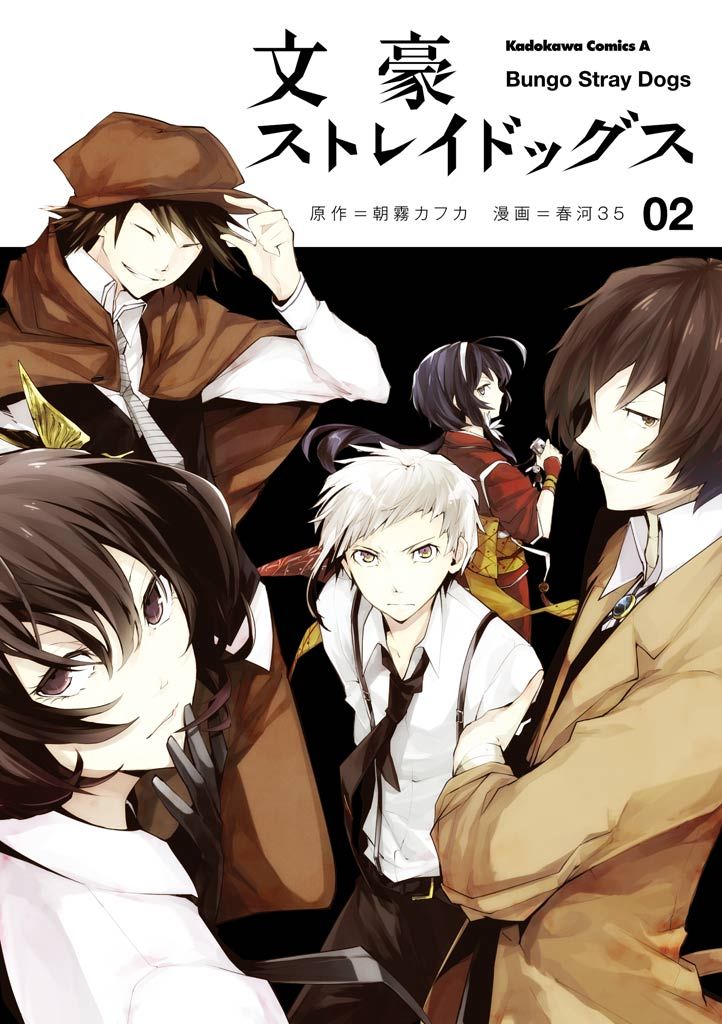
Cover of Bungo Stray Dogs volume two.
Bones studio’s Bungo Stray Dogs (lit. Literary Stray Dogs), a popular Japanese anime series which originally started airing in 2016, is making a big comeback with its third season this April (1). The otaku fandom is naturally excited; it has been almost a year since the series’ last movie adaptation, Bungo Stray Dogs: Dead Apple (2018), was released, and the adaptation, by introducing a bunch of new characters, excellent villains, and a fairly complex plot, only left us with much more questions than it answered.
Bungo Stray Dogs is based on the supernatural action manga of the same name that follows a group of skilled agents gifted with supernatural powers which they use to solve mysteries, fight Yokohama’s underground mafia, and occasionally blast a building or two into the sky.
But apart from the crowd that is regularly engaged with Japanese animation, Bungo Stray Dogs has a lot to offer to audiences that are not that well versed in Japanese anime and manga culture. Above all, it offers them a crash course in Japanese, American, and Russian literature.
Written by Kafka Asagiri and illustrated by Sango Harukawa for Young Ace magazine in 2012 (1), Bungo Stray Dogs is probably best known for basing its characters on famous writers and their books, such as Osamu Dazai, Ryunosuke Akutagawa, E. A. Poe, F. Scott Fitzgerald, and F. M. Dostoevsky. While each Bungo character represents a particular writer, their supernatural power is in one way or another connected to that writer’s works.
This way, for instance, Bungo Stray Dogs’ Osamu Dazai (all characters are actually called the same way as the writer they’re were based on), one of the series’ central figures, was inspired by the early 20th-century Japanese writer Osamu Dazai, author of The Setting Sun (1947) and No Longer Human (1948). The writer had a short but turbulent life: he lived during the two world wars, experienced a series of more or less serious diseases, wrote a number of novels and short stories whose popularity quickly turned him into a celebrity and attracted a secret admirer, regularly enjoyed way more sake than is advisable, and attempted to commit suicide several times until he finally succeeded in doing so in 1948, together with his wife Tomie Yamazaki. Inspired by these elements from Dazai’s life, Bungo’s Dazai is, as a result, constantly preying for a partner to commit a double suicide with, and his special ability, which allows him to cancel other ability-users’ power, is called “No Longer Human”, just like the ‘real-life’ Dazai’s famous novel.
Similarly, one of the series’ main antagonists, the Port Mafia member Ryunosuke Akutagawa, is based on the Japanese writer Ryunosuke Akutagawa, “Father of the Japanese Short Story”, whose famous works include Rashomon (1915), Hell Screen (1918), and In A Grove (1922). Many of Akutagawa’s stories are characterized by their macabre character. Rashomon, for example, is a story about an encounter between a servant and an old woman at the southern gate of Kyoto, where corpses were sometimes dumped. Hell Screen recounts the life of the painter Yoshihide who looses his mind in the process of creating a folding screen depicting the Buddhist hell. Akutagawa’s macabre aesthetic is also one of the main features of Bungo’s antagonist Akutagawa: the sickly, pale-skinned member of the mafia is always wearing dark clothes with a slight aristocratic touch and his ability, “Rashomon”, allows him to summon a phantom-like creature from his coat.
The same character-modeling principle (i.e., developing characters based on famous writers and their works), applies to the American and the Russian part of Bungo’s character repertoire. Bungo’s F. Scott Fitzgerald, a young millionaire and leader of the North American organization called The Guild, parades through the streets of Yokohama together with his fellows H. P. Lovecraft and Nathaniel Hawthorne just as the ‘real-life’ Fitzgerald’s Gatsby probably paraded through the streets of New York City during the Roaring Twenties. The Russians, Ivan Goncharov and A. S. Pushkin, are grouped together in an underground secret organization called Rats in the House of the Dead (the name is a reference to F. M. Dostoevsky’s novel The House of the Dead (1862)), led by the mastermind Fyodor Dostoevsky, whose ability is none other than “Crime and Punishment”, inspired by the Russian writer’s famous work.
All these different characters’ encounters on the streets of Yokohama, whose night scape is beautifully depicted in classically neon, cyberpunk tones, generate a unique atmosphere in which different cultures collide; E. A. Poe struggles to outwit his Japanese counterpart Edogawa Ranpo, while Herman Melville is gliding above them and the Yokohama skyline in Moby Dick, The Guild’s official aircraft (you can probably guess it’s in the shape of a whale).
But besides letting you pick up a few names from Japanese, American, or Russian literature, Bungo Stray Dogs has few more things to offer. The dynamic between the various literary-inspired characters creates original (although sometimes a bit complex, and sometimes a bit dark) plot lines. For example, while the initial plot line largely centers on Nakajima Atsushi, who was kicked out of an orphanage and has no food and no place to go but suddenly runs into Osamu Dazai and his partner Kunikiada who are tracking down a loose tiger that appeared in the area (the tiger later turns out to be Atsushi himself), the initial focus on Atsushi, who nevertheless remains one of the central figures of Bungo’s story world, gradually fragments into several plot lines which follow the Armed Detective Agency’s encounters with the Port Mafia, The Guild, and, later, the Rats of the House of the Dead. The perspective also frequently changes from that of the detective agency to a close-up view of the mafia’s business, which allows us to discover some elements of the characters’ dark past. Finally, although Bungo Stray Dogs is generally not a ‘dark’ anime (apart from some bloody visuals here and there), it does get pretty dark in Bungo Stray Dogs: Dead Apple with the introduction of the antagonists Tatsuhiko Shibusawa and Fyodor Dostoevsky as special ability users in Yokohama and all over the world suddenly start committing suicides.
All in all, even if anime and manga are not really your thing, but you do have an interest in literature and cross-cultural encounters of all kind, I would definitely recommend giving Bungo Stray Dogs a go. The series is pretty unique in the way it plays with cultural figures from different parts of the world and engages them into unexpected encounters on the streets of Yokohama. Its underlying literary theme gives the otherwise ‘yet-another-action-anime’ an original touch and might end up being just right for all the ‘less-anime-and-manga-inclined’ bookworms out there.
Sources:
1. Valdez, Nick. “Bungo Stray Dogs’ Season 3 Shares New Poster.” ComicBook.com, 1 January 2019, https://comicbook.com/anime/2019/01/01/bungo-stray-dogs-season-3-poster/. Accessed 9 February 2019.

Productive with Music
Walking through the library during the exam period, simply searching for your own study spot, makes it quite clear what the opinion of most Groningen students on joining music and studying together is. Headphones and earphones are omnipresent in the study areas just as much as they are present at gyms; allowing everyone to immerse in their music of choice to help them perform the task at hand better.

The studying girl on one of the most popular YouTube Lofi Hip Hop mixes: https://www.youtube.com/watch?v=-FlxM_0S2lA.
Disclaimer: The contents and opinions of this blog post do not represent the views or values of Honours Review as a publication.
Walking through the library during the exam period, simply searching for your own study spot, makes it quite clear what the opinion of most Groningen students on joining music and studying together is. Headphones and earphones are omnipresent in the study areas just as much as they are present at gyms; allowing everyone to immerse in their music of choice to help them perform the task at hand better. Such a pattern can be seen as a symptom of today’s so-called ‘iPod culture’, in which the habit of mobile listening allows one to privatize space and time (1), tailoring it to their own needs; but at the same time, the continued growth of its prominence may suggest there are more advantages to studying, working or exercising with music than simply a sense of self-controlled privacy.
YouTube and Spotify playlists such as “Lofi Hip Hop Radio: Beats to Relax/ Study to” and “Lofi hip hop radio-chill/ study beats” (or, more traditionally, “Mozart - Classical Music for Brain Power”) are swarmed with views, mostly from stressed college and university students in their exam periods. At the same time, multitasking and any kind of sensory overload are never recommended to improve focus and efficiency: so wouldn’t we be better off being productive in silence?
The iPod culture might have only started with the 21st century, but background music has been a concern of workplaces (as well as restaurants or shopping venues) already in the 1930s and 1940s; not to mention there are ideas of songs lifting up the workers’ spirits dating back even to Ancient Greece: such as “the sound of whistles, of flutes and fifes to encourage the work-folk” in Aristophanes’ Acharnians (2). Perhaps the most prominent industry attempting to control moods with music was American Muzak. Drawing on multiple artists’ work, the brand released recordings for all sorts of settings, from lounges to factories. Some of their albums meant to relax, other to make one spend more; or to effectively boost one’s productivity. For this last purpose, the company came up with Stimulus Progression; a remedy for the “industrial efficiency curve”, or more commonly called “fatigue curve”. The tunes were sorted by mood (from Gloomy to Ecstatic) and chosen exactly to stimulate energy when it was at the lowest; at the same time combat monotony in periods of hyperactivity. Reports of the effectiveness of Muzak’s invention included a reduction in stress, better concentration and work results: for both factory and office workers (3).
Would Muzak be one’s best call to get productive with nowadays too? At least when trying it out myself, no miraculous effects faced me; close to no one seems to use Stimulus Progression when working these days probably for a reason. This reason could be our current ability to customize our own study playlist without having to rely on ready-made background music, the change in music tastes; or simply, the availability of an alternative.
Despite having a possibility to play their favorite music while studying, the aforementioned “study playlists” or “study streams” especially of the lofi (low fidelity) hip hop/ chillhop genre (as explained by Ryan O’Halloran, “a slightly more rugged flavour of general hip hop” (4)) with looped animations of focused people or adorable raccoons working tirelessly gain millions of views; and according to their comment sections, help countless young adults study and pass their exams. The music itself is rather monotonous, downtempo, foregrounding the beat; with a “muffled drum machine pitter, a few lazy nocturnal synth beams, perhaps an entranced, elliptical vocal sample sourced from self-help tapes, ancient cartoons, Nintendo 64 games, or public-access flotsam” (5); plus the unavoidable lofi element of vinyl-like crackles (4). It has been be argued the appeal of this sort of playlists lies in their direct reference to the nostalgia for beats and aesthetic of Cartoon Network's Adult Swim and Toonami, or the importance of the moving image of productivity, or the ease with which this kind of calm, repetitive music blends into the background (5).
Such claims so far, are not a result of any academic studies; however, the researches made before on music and focus, music and mood control, as well as music and memorizing can be of guidance when understanding the phenomenon of lofi study music streams from their auditory side. So far, it has been argued that:
Listening to music before a task can improve attention and memory (6);
Liked and disliked music with vocals/lyrics are both equally distracting during a task (6);
Emotionally neutral music has a better effect on memory for those with previous musical training, while subjectively pleasurable music works better for those without it (7);
Music with simple musical structures and without lyrics can boost productivity especially on repetitive tasks, for those used to working with music and having control over the music they choose to listen to (8);
Last but not least, music can block off undesired sounds in the environment that could potentially be distracting to conscious attention: such as someone sniffing, whispering or typing on their laptop as it often happens at the library (9).
This is just a part of the relevant research; however, it can begin to point towards the source of lofi hip-hop popularity. Instrumental, simple, background, indistinct, and rather neutral but at the same time pleasurable, the streams seem to play into most, if not all, requirements for music successfully blocking off outward noise, boosting productivity, while at the same time is hardly distracting. The nostalgic elements of the playlists make sure the beats blend right in with what we are used to, not drawing too much attention, and the loop of studying characters are relatable, motivating, and just the right visual fit for the music. Although, or perhaps because the lofi streams don’t seem to follow the Stimulus Progression ideas Muzak suggested, rather sticking around the neutral/ a bit down mood levels, they work better for our generation.
After all, it’s common we start studying already stressed, somewhere in the middle of the fatigue curve: what we need isn’t just stimulating energy and motivation, but also relaxation, and a chill study environment of our own in the pacing world.
Sources:
Bull, Michael. “No Dead Air! The iPod and the Culture of Mobile Listening”. Leisure Studies, Vol. 24, No. 4. Routledge, 2005. http://asounder.org/resources/bull_nodeadair.pdf.
Aristophanes. The Acharnians. Project Gutenberg Etext, 2002. http://www.dominiopublico.gov.br/download/texto/gu003012.pdf.
Lanza, Joseph. Elevator Music: A Surreal History of Muzak, Easy-Listening, and Other Moodsong. University of Michigan Press, 2004.
Alemoru, Kemi. “Inside YouTube’s calming ‘Lofi Hip Hop Radio to Relax/Study to’ community”. Dazed Digital, 2018. http://www.dazeddigital.com/music/article/40366/1/youtube-lo-fi-hip-hop-study-relax-24-7-livestream-scene.
Winkie, Luke. “How 'Lofi Hip Hop Radio to Relax/Study to' Became a YouTube Phenomenon”. Vice, 2018. https://www.vice.com/en_us/article/594b3z/how-lofi-hip-hop-radio-to-relaxstudy-to-became-a-youtube-phenomenon.
Perham, Nick. “Can preference for background music mediate the irrelevant sound effect?”. Applied Cognitive Psychology, Vol. 25, No. 4. Wiley Online Library, 2011. https://onlinelibrary.wiley.com/doi/abs/10.1002/acp.1731.
Klemm, William R. “Does music help memory?”. Psychology Today, 2013. https://www.psychologytoday.com/intl/blog/memory-medic/201312/does-music-help-memory.
Haake, Anneli B. “Music at work: distracting or beneficial?”. Music at Work, 2011. http://musicatwork.net/music-at-work-distracting-or-beneficial/.
Burnett, Dean. “Does music really help you concentrate?”. The Guardian, 2016. https://www.theguardian.com/education/2016/aug/20/does-music-really-help-you-concentrate.
Turning a New Page: The Destiny of Literature in the Digital Era
For many people, the start of a new year symbolizes an opportunity for new commitments, especially regarding self-improvement of not only the body, but also the mind. According to a recent Elliptical Reviews survey (3), the goal to read more books is among the top ten New Year’s resolutions, whether “more” means “more” compared to past reading habits or marking a newfound desire for intellectual growth. However, reflecting on the potential obstacles for reaching this goal, the time that could be spent reading often goes to other recreational activities: watching movies or TV, browsing the Internet or playing video games. While literature is not inherently superior to these types of entertainment in the sense of gaining new experiences and knowledge, it may seem like the newer media are replacing books in the stores, technologies and minds for many of the post-Internet generation. This begs the question: could the fate of digital era books truly be summarized as “out with the old, in with new”?

Disclaimer: The contents and opinions of this blog post do not represent the views or values of Honours Review as a publication.
Introduction
For many people, the start of a new year symbolizes an opportunity for new commitments, especially regarding self-improvement of not only the body, but also the mind. According to a recent Elliptical Reviews survey (3), the goal to read more books is among the top ten New Year’s resolutions, whether “more” means “more” compared to past reading habits or marking a newfound desire for intellectual growth. However, reflecting on the potential obstacles for reaching this goal, the time that could be spent reading often goes to other recreational activities: watching movies or TV, browsing the Internet or playing video games. While literature is not inherently superior to these types of entertainment in the sense of gaining new experiences and knowledge, it may seem like the newer media are replacing books in the stores, technologies and minds for many of the post-Internet generation. This begs the question: Could the fate of digital era books truly be summarized as “out with the old, in with new”?
Passing the Torch
The declining popularity of reading is a notorious modern day debate topic, having countless concerned think pieces and calls to action, such as The Washington Post warning that “The death of reading is threatening the soul” (8). Literary statistics, too, depict a rather gloomy picture: Although the number of books published per US inhabitant has increased threefold since the 1920s (5), the number of non-readers has also tripled between 1978 and 2014 (7). The pessimistic nature of these facts may have theoretical support in political economist Joseph Schumpeter’s concept of “creative destruction” – the ongoing cycle of the old structures, or in this case media, being destroyed as new ones emerge (6). Beyond theory, this process can be seen reflected in culture as well, such as the 1979 hit song “Video Killed the Radio Star”.
In view of this, it seems entirely possible that the decline of books could be tied to the rise of digitally accessible entertainment content, from Netflix series to SoundCloud podcasts. After all, historically the introduction of domestic television dealt a blow to movie theatre revenues, and the invention of the Internet allowed file sharing and piracy to threaten music industry’s livelihood. Still, all of these media continue to coexist today, each with hundreds of millions of daily consumers. Therefore, the fate of literature might not hinge on direct competition with digital entertainment, but rather on enduring the current drop in the popularity of reading and finding opportunities to work together with, not in spite of, technological change.
A Double-Edged Sword
Undeniably, books have not remained unaltered since the days of monk illustrated manuscripts or Gutenberg’s printing press. Just like we are no longer limited to dial-up Internet and silent movies, literature, too, has adapted to the technological advancements. Thus, the appearance of e-books and audiobooks created ways for members of today’s increasingly mobile society to read books while travelling with limited room for baggage, or to listen to them on their way to work. This upgrade from paper to electronic formats allows books to share the key aspect of accessibility, which has ensured the advancement of media like the Spotify music streaming platform.
Nevertheless, it may not be enough for books to catch up to new technological affordances if they might also negatively affect the societal affinity for reading. The immediacy and availability of online entertainment is condemned by many, such as linguist Naomi Baron, as teaching us “to skew the balance away from continuous reading, much less close reading, and toward reading on the prowl” (1). The presence of the “TL;DR” abbreviation (meaning “too long; didn’t read) alongside longer online texts raises concerns for the continued capabilities of text-only books to reach audiences which are technologically discouraged from long, intensive reading practices.
On the Same Wavelength
The issue of the traditional book composition feeling outdated and lacking in comparison to newer media, despite the actual entertainment value of the content, may have a solution in the transformation of literature beyond a strictly textual experience. Conceptualized as remediation (“the formal logic by which new media refashion prior media forms”) (2), this is reflected in the countless adaptations of books into movies, TV series and other formats which tend to require a different type of mental effort to understand and enjoy. While it is arguable whether this transplantation of content into other media settings would still classify it as literature, quite often remediated books at least attract a wave of new readers. This reveals a futuristic, mutually beneficial relationship between books providing creative content for adaptation and other media effectively serving as advertisements for the source material.
Moreover, the fate of today’s book industry might also be helped by other digital media offering ways to improve the reading community. Social media platforms can lend to literature an interactive dimension it cannot achieve on its own, ranging in shape from Twitter discussions about literary universe theories, to sharing fan art of book series’ characters on Tumblr, to having a fan collective Q&A with authors on Reddit. In this regard, the integration of technology within the book reading experience may seem like a positive turn of events.
Conclusion
Based on the successes of e-books, audiobooks and literary remediation, there does not appear to be an outright battle of technology and literature, where “[w]e’re engaged in a war, and technology wields the heavy weapons” (8). However, it would be short-sighted to dismiss the role of creative and digital evolution in the ways we now read or don’t read, as actor Stephen Fry did with his much-quoted Tweet: “Books are no more threatened by Kindle than stairs by elevators” (4). In-between the black-and-white views of literary pessimism and optimism lies the acceptance of platforms like video gaming and social media coexisting and often interacting with the content of books. From this perspective, it would appear that books, both paper and electronic, are experiencing not a death, but a rebirth in appearances more suited for today’s technology-driven, culturally diverse society.
Bibliography:
1. Baron, N. S. (2015). Words onscreen: The fate of reading in a digital world. New York, NY: Oxford University Press.
2. Bolter, J., & Grusin, R. (1999). Remediation: Understanding new media. Cambridge, MA: MIT Press.
3. Committing to the New Year. (2018). Elliptical Reviews. Retrieved from https://www.ellipticalreviews.com/new-years-resolutions/
4. Fry, S. [stephenfry]. (2009, March 11). This is the point. One technology doesn't replace another, it complements. Books are no more threatened by Kindle than stairs by elevators x [Tweet]. Retrieved from https://twitter.com/stephenfry/status/1312682218?lang=en
5. Kovač, M., Phillips, A., Van der Weel, A., & Wischenbart, R. (2017). Book statistics: What are they good for? Logos, 28(4), 7-17.
6. Schumpeter, J.A. (1962). Chapter VII: The process of creative destruction. In Capitalism, Socialism and Democracy (3rd ed., pp. 81-86). New York, NY: Harper Torchbooks.
7. Weissmann, J. (2014, January 21). The decline of the American book lover. The Atlantic. Retrieved from https://www.theatlantic.com/business/archive/2014/01/the-decline-of-the-american-book-lover/283222/
8. Yancey, P. (2017, July 21). The death of reading is threatening the soul. The Washington Post. Retrieved from https://www.washingtonpost.com/news/acts-of-faith/wp/2017/07/21/the-death-of-reading-is-threatening-the-soul/?noredirect=on&utm_term=.2af7bff512d4
‘Reinventing the Wheel’: How the Current Anime and Manga Scene Is Drawing Its Inspiration from the Theme of ‘the Doppelgänger’
Anyone who has ever read Sui Ishida’s popular dark fantasy manga series Tokyo Ghoul or watched at least one episode of its anime adaptation probably noticed that the series largely builds its plot around the theme of the so-called ‘(evil) double’ or ‘the Doppelgänger’.
Disclaimer: The contents and opinions of this blog post do not represent the views or values of Honours Review as a publication.
Anyone who has ever read Sui Ishida’s popular dark fantasy manga series Tokyo Ghoul, or watched at least one episode of its anime adaptation, probably noticed how the series largely builds its plot around the theme of the so-called ‘(evil) double’ or ‘the Doppelgänger’.
Tokyo Ghoul is set in an alternate reality where humans coexist with cannibalistic ghouls. The ghouls look exactly like ‘normal’ human beings as well as mimic their behavior and appearance. Most of them live among the human population in secret to avoid being caught by the authorities. Some of them, however, are consciously trying to suppress their ‘ghoulish’ nature, integrate with the human population, and pursue a ‘normal’, human life.
Throughout the greater part of the series, the protagonist Kaneki Ken struggles with his ‘inner-ghoul’ and tries to find a balance between his human and ghoul side. Kaneki’s struggle, however, is a bit more intense than that of an ‘every-day ghoul’ because Kaneki is a half-ghoul; neither a complete ghoul, nor a complete human being. A half-ghoul is usually an offspring of a human and a ghoul or is created artificially by transplanting ghoul organs into a human, as was the case with Kaneki.
As a half-ghoul, Kaneki experiences double-alienation; both from the world of ‘pure’ human beings and the world of ‘pure’ ghouls, due to which his character development primarily revolves around balancing the ‘human Kaneki’ and the ‘ghoul Kaneki’, as well as finding a way for humans and ghouls to coexist. The whole concept of the inner coexistence between the ‘human Kaneki’ and the ‘ghoul Kaneki’, together with the character’s attempts to suppress his ‘ghoulish’ nature at the beginning of the series, is also reflected in the first seasons’ opening theme Unravel by Toru Kitajima from Ling Tosite Sigure and its lyrics: “Is there someone inside of me?”
In Ishida’s world, the figure of the ghoul can be seen as a metaphor of duality and the darker side of human nature. The ghoul metaphorically channels suppressed desires and/or uncontrollable feelings. So, for instance, while ‘human Kaneki’ would not even dare to hurt a fly, the ‘ghoul Kaneki’ channels precisely those aspects of Kaneki’s character which largely remain suppressed or hidden in his ‘human side’, such as Kaneki’s eventual decision to ‘hurt’ (i.e., completely smash) other ghouls in order to protect the people he cares for. But this dynamic between the two sides of Kaneki’s character and the idea of suppressing some uncontrollable aspects of human nature is not really that new in contemporary Japanese popular culture.
In general, the theme of the “Doppelgänger” (German: Literally “double-goer”) actually goes all the way back to German Romanticism and the German poet Heinrich Heine. Heine’s poem Der Doppelgänger (1828) introduces the figure of ‘the double’ through the image of a man who suffers a mental breakdown once he encounters an individual looking uncannily like him.
Even though the theme of the “Doppelgänger” has roots in German Romanticism, it has become better known through the works of Edgar Allan Poe, Robert Louise Stevenson, and the Russian writer Fyodor Mikhailovich Dostoevsky. Poe’s short story William Wilson (1839) revolves around a student who meets a boy of the same name, age, and appearance. As a result, he loses his mind as the story unfolds and ‘the other William Wilson’ keeps appearing at different stages of ‘the original William Wilson’s’ life. Stevenson’s Strange Case of Dr. Jekyll and Mr. Hyde (1886) is probably the most famous story dealing with the theme of ‘the double’, in which Dr. Henry Jekyll experiments with chemicals that eventually turn him into the devious Mr. Edward Hyde. Finally, Dostoevsky’s famous novel The Double (1846) tells the story of a mentally-unstable clerk who is convinced that a double is stealing away his job, girl, and eventually bedroom. There’s a bunch of other books dealing with the theme of ‘the double’, but these are probably some of the best-known examples. There’s also a ton of pretty interesting movie adaptations to check out, such as Richard Ayoade’s The Double (2013), focusing on Dostoevsky’s novel.
The theme of ‘the double’ is also flooding the contemporary anime and manga scene and many popular series and productions are arguably inspired by the same themes that intrigued the minds of Poe and Stevenson almost a century ago. Tokyo Ghoul is just one of them. Recent volumes of Yana Toboso’s manga series Black Butler, for example, have revealed that the young Earl Ciel Phantomhive actually has a twin brother (as if one spoiled English lord was not enough for Sebastian to handle).
Although dealing with the theme of ‘the double’ in a different way, Hajime Isayama’s Attack on Titan is similar to Tokyo Ghoul in some of its underlying ideas. For instance, while in Ishida’s story world the ghouls turn into a metaphor of some darker aspects of human nature, the same can be said for the humanoid giants in Isayama’s. Attack on Titan’s protagonist Eren Yaeger also goes through similar struggles as Kaneki while trying to control the transformations into his titan form. The figure of the titans, and the idea of humans transforming into them, can also be read as a metaphor of uncontrollable or inhuman urges that are sometimes difficult to suppress or should, for better or for worse, perhaps remain hidden.
The same goes for Ichigo Kurosaki from Tite Kubo’s manga and anime series Bleach. In Bleach, the theme of ‘the double’ is represented through Ichigo’s struggles with his hollow side (in the fictional world of Bleach, hollows are corrupted spirits which devour the souls of human beings), and many episodes of the anime and manga are visually impressive in their way of depicting how the human in Ichigo is gradually being devoured by the hollow inside him.
The list of anime series inspired by the theme of ‘the double’ could go on into infinity, but I will wrap up with one last example: Kazue Kato’s Blue Exorcist. This one is perhaps not the most obvious example but we can read Rin Okamura’s initial urge to suppress his demon instincts as representing a struggle between his ‘human self’ and the ‘demonic other’.
All in all, it is interesting to see how many anime and manga series are actually inspired by similar themes. From Tokyo Ghoul to Attack on Titan and Blue Exorcist, some elements in all of these series can be seen as based on the concept of ‘the Doppelgänger’ or ‘the (evil) double’. The frequent occurrence of the motif of ‘the double’ and the protagonist’s inner struggle to balance different aspects of his/her personality attests to these themes’ recurrent presence in contemporary Japanese popular culture, even though they have roots in German Romanticism and Edgar Allan Poe, or probably even further back in history. In any case, one could easily say that the series discussed above are just ‘reinventing the wheel’, but they all are still pretty amazing and give a ‘centuries-old theme’ their own, unique twist.

Personalising the World: The Implications of Curated Media
Song recommendations, video suggestions, related articles – these are just some of the curated features we have come to rely on when using platforms like Spotify, YouTube and online news sites. All of these strategies for making us consume more and more media material draw upon the much-debated concept of personalisation: tailoring content to suit personal preferences. It might sound luxurious, but there are darker consequences to individuals and their communities indulging in the custom-made appeal inherent to many aspects of today’s world.

Disclaimer: The contents and opinions of this blog post do not represent the views or values of Honours Review as a publication.
Introduction: The Public View on Personalisation
Song recommendations, video suggestions, related articles – these are just some of the curated features we have come to rely on when using platforms like Spotify, YouTube and online news sites. All of these strategies for making us consume more and more media material draw upon the much-debated concept of personalisation: tailoring content to suit personal preferences. It might sound luxurious, but there are darker consequences for individuals and their communities indulging in the custom-made appeal inherent to many aspects of today’s world.
Ironically, a reflection of society’s worries about online personalisation’s negative effects is often most visible in online environments which employ different methods of personalisation, such as news sites. Wired claims companies like Google and Facebook are “violating our free will to choose the information we want” (2); Forbes publishes articles titled “Digital Privacy: Brands Figuring Out Where Personalization Gets Creepy” (5). When navigating opinions like these, readers should think critically about the many invisible ways that music, news and video content is curated for them on an everyday basis. Entrusting the personalisation of one’s information and entertainment to media companies and algorithms: is it a violation of the natural order or simply a convenience of technological development?
Catering to the Individual
Almost every website and media producer we turn to for content uses some type of curation not only to provide us with the song or video we were originally searching for, but also to keep us browsing other options for as long as possible. After all, our attention translates into their profits when we are exposed to on-site advertisements or pay our subscription fees. Media giants like Netflix are at the forefront of innovating strategies for learning each viewer’s preferences and accordingly crafting their binge-watching and Netflix browsing experiences. It is not just that different viewers will be offered different content: now, even the thumbnails for the same shows are customised based on individual viewing history (1). Of course, the millions of users to learn about and tons of screenshots to choose from for the most fitting thumbnail make this job impossible for humans to manage without the help of algorithms. But how accurately can a machine know us and predict our tastes?
When it comes to personalisation-specific algorithms, Spotify can be seen as the contemporary expert. Collecting and analysing mountains of data, the streaming service categorises listeners according to their taste profiles and then makes playlists like Discover Weekly – composed of songs you have not listened to, but which are supposed to fit your preferences. It is certainly an effective method for making the listener feel catered to, but it might also contribute to the depersonalisation of humans as complex beings who change over time, perceiving us more like machines to be figured out and kept satisfied. Internet activist Eli Pariser’s notion of the filter bubble – a state of intellectual isolation resulting from algorithm catered content (6) – is a related phenomenon that might not seem too serious regarding our preferences for music or TV series. Applied to news consumption or online political participation however, it raises concerns about the convenience of personalised content removing the necessity for the individual to explore, grow and change their perception of the world.
The Curated Community
Considering human evolution and development of technology, we might look at personalisation algorithms as just the newest disruptive element in the history of our media consumption. The “older media” of radio, broadcast TV and newspapers now have more attractive alternatives, respectively Spotify, Netflix and curated online news feeds. While this has undoubtedly been beneficial for many us, as we are free to access niche content any time, any place, often for lower prices, there are also losses to the broader society stemming from these changes in media use. The physical presence of a medium like television in households across the world has historically been tied to the family and community bonding functions a TV screen can fulfil (3). Now that we can view TV content on our phones, computers and tablets instead, there is reason to worry about the extent to which personalised media can bond community members rather than emphasise their differences and thus isolate them.
The idea of our belonging to a local community being limited by the isolating effects of media personalisation draws upon media theorist McLuhan’s popular concept of the “global village” – the world tuned into a village by technology, which enables information to move far and quickly (4). It is now much easier to be exposed to content from across the world whose niche characteristics, as identified by algorithms, match your preferences, where before one might have had to put in more effort to search for fitting content closer to home. Still, content in local newspapers, news and radio channels is also personalised, albeit in less detail, for us as members of the local community. Therefore, since many people continue to consume both global and local content, for example, visiting local concerts as well as going abroad to see your favourite artist perform, perhaps the community bonds are simply adjusting instead of disintegrating as feared.
Conclusion
A shift can be perceived in the counter movement to the potential self-isolation brought on by having your tastes constantly catered to. This opposition is the way we use our personalised content to represent ourselves on social media – a behaviour rooted in human history and nature, thus denying power to the argument that personalisation leads to humans being perceived more as machines to be figured out. Similar to how the content of your bookshelf and the ability to frequent opera houses was representative of your social status centuries ago, nowadays, the pages we follow on Facebook and the Spotify playlists we share with our friends are indicative not only of what we like, but also how we want to and will be perceived by others.
It does not seem that personalisation can be classified as a violation of human bonds as much as an agent of change, but it cannot be naively viewed as a no-strings-attached technological convenience either. Instead, the effects and future uses of personalisation depend on how we will balance the interactions between the algorithm and the human mind, as well as between the media company and the media consumer.
Bibliography:
1. Barton, G. (2018, November 21). Why your Netflix thumbnails don’t look like mine. Vox. Retrieved from https://www.vox.com/2018/11/21/18106394/why-your-netflix-thumbnail-coverart-changes.
2. Kaushik, P. (2014). Tomorrow’s Internet: A world of hyper-personalized tribes?Wired. Retrieved fromhttps://www.wired.com/insights/2014/03/todays-internet-world-hyper-personalized-tribes/.
3. McCarthy, A. (2001). Shaping public and private space with TV screens. In Ambient television: Visual culture and public space (pp.117-153). Durham: Duke University Press.
4. McLuhan, M. (1987). Letters of Marshall McLuhan. Oxford: Oxford University Press.
5. Newman, D. (2018, March 20). Digital privacy: Brands figuring out where personalization gets creepy. Forbes. Retrieved fromhttps://www.forbes.com/sites/danielnewman/2018/03/20/digital-privacy-brands-figuring-out-where-personalization-gets-creepy/#668ddae243a7.
6. Pariser, E. (2011). The filter bubble: What the Internet is hiding from you.New York, NY: Penguin Press.

The Vinyl Craze; Retromania of Our Age
Not so long ago, when visiting my friend in her room, I noticed an old vinyl record of The Beatles on the shelf. Intrigued, as it certainly wasn’t there before, I soon learnt that she has bought it in a second-hand shop for quite a low price, which certainly would not be surprising–if it was not for the fact that she does not have a gramophone, nor does she intend to buy one.

Disclaimer: The contents and opinions of this blog post do not represent the views or values of Honours Review as a publication.
Introduction
Not so long ago, when visiting my friend in her room, I noticed an old vinyl record of The Beatles on the shelf. Intrigued, as it certainly wasn’t there before, I soon learnt that she has bought it in a second-hand shop for quite a low price, which certainly would not be surprising–if it was not for the fact that she does not have a gramophone, nor does she intend to buy one. The record was going to just stand on her shelf, unused; she simply bought it as a collection item, following the vinyl craze of our age.
This boom for the old audio formats, starting in 2006, is a peculiar development, and an unexpected one. With the advent of mobile digital sound technologies and cheaper CDs, one might have thought the vinyls will soon become forever obscure, like symbols of nostalgia, perhaps only kept alive by hipsters of the same sort that still purchase cassette tapes (1). But, according to Pitchfork, this once-forgotten format feels closer to the mainstream than it has in decades- vinyl sales keep rising and currently peak in 2018 (2). With a high demand, the supply follows, and many of the most popular artists decide to release their albums on vinyls along with the CDs, creating a new supply, in an ever-increasing cycle. The industry is doing great and the trend is becoming more widespread with every year. One question is left: why do people still buy vinyls, having so many simpler options? Multiple answer can be found: in the nature of sound itself, but also in the concepts of authenticity, retromania, and cultural capital.

The Vinyl “Sounds Better”?
A frequent argument of the fans of collecting vinyls is that the LP (long-playing) records simply sound better than their CD counterparts. These people proudly call themselves audiophiles, for whom the subtle differences in sound in different audio formats matter a lot. The public debate on the issue is, however, two-sided. From the technical side, both vinyls and CDs seem to have their advantages. The process of sound reproduction would speak in favor of analog (vinyl) recordings mostly due to the simple fact that the original sound is always analog; and needs to be fractured when converting to a digital format, and reconstituted when it’s played out. Recorded and replayed digitally, CDs have a chance of losing or altering the raw sound wave, even if the changes are minor and hard, if not impossible, to hear. Vinyls as analogs do not need to convert and fracture the sound, as a result being more true to the originally recorded audio (3). On the other hand, CDs enjoy advantages such as a higher available range between the loudest and the softest sounds, lack of the gramophone’s mechanical noise, precision of speed, and longevity–no matter how many times you’ll play the CD out, it will sound the same, while the vinyl would begin to deteriorate (4). From a more human-centric perspective, Pitchfork explores how the “cheap and bad” mp3s led to the digital format as a whole becoming perceived as such, while there can be, of course, great variance in the quality of CD sound (5). In addition, it can be argued that the true special element of the vinyl audio lies more in the distortion that it introduces, a home-like warmth and a sense of closeness that the analog sound can introduce in opposition to more “mechanical” digital sound, rather than in the accuracy of it (5).
Authenticity and Retromania
A quite interesting pattern to notice about the sales of vinyl records is the massive lead that the rock genre enjoys in that industry (2). As such, it needs to be considered whether the concepts of authenticity and fidelity (described by Philip Auslander as crucial to the conservative, exclusionist rock ideology) might be at play in generating a large part of the vinyl craze. Drawing from the technical vinyl properties (as described in the previous paragraph), the perfect reproduction of the original, live sound wave may be of importance to hardcore rock fans even if they cannot really hear a difference–only as an expression of authenticity. In the rock ideology, what really matters is liveness, put in opposition to the “fake”, mechanical Other of pop (6). Extending this binary opposition of the “real” versus the mechanical to the raw, distorted analog sound and the flawless, converted digital audio, it is easy to understand why rock fans could feel drawn to vinyls more than to CDs. The authenticity ideology is less conservative in other genres but may still play a role in LP record sales, especially when it comes to buying older music in its original format–but in this case, authenticity crosses its path with the domains of retromania and symbolic capital.

The older vinyl recordings specifically may be subjected to a particular type of authenticity drive related to the memory- something the music critic Simon Reynolds calls retromania–an addiction to the past that our age specializes in. A part of his argument for the reasons of vinyl popularity is its “freaky” format–recording the voices of often dead musicians and long gone bands in a form that replicated the sound wave exactly, without fracturing; a ghost medium that once dead is now coming back (7). The return to the past through the vinyl can give the listener a thrill, a feeling of nostalgia, of being back in the past–even if the practice of collecting older vinyls is often, in his opinion, superficial and selective (7).
Cultural Capital
Listening to vinyls can be important to people in terms of sound, ideology, feelings, and memories; but these arguments hardly explain why some, like my friend described in the introduction, invest in LP records they will probably never actually listen to. Hoarding and collecting is a phenomenon that is not only specific to humans; but an interesting idea that can explain why is it the vinyls rather than CDs that most collectors decide to fixate on enough to spend money on just possessing them, is Pierre Bourdieu’s concept of cultural capital: a capital that is based on the cultural value of goods, experiences, and skills: such as the value of famous art works, a high school diploma or a learnt language (8). According to Bourdieu, the cultural capital is eventually indirectly transferred into economic capital, and hence is worth spending money on. In the case of vinyls, one can argue that possessing a collection of vinyls is quite prestigious, regardless of whether they are actually listened to. Prestige in turn, in Bourdieu’s terms, rises one’s social/class position significantly, eventually contributing to one’s economic position (8). Most vinyl collectors are probably not consciously seeking economic profit from their hobby, but prestige could already be an important factor for them–either to show off to friends, impress strangers, or justify claims to being regarded a true music fan... and a true audiophile.
Conclusion
Behind the simple statements of “vinyls sounding good” or “vinyls being special” a whole set of theories, and underlying, hidden concepts can be spotted-this brief article presents only some of the possibilities. Because of that, LP records can appeal to many different people, and are entering the mainstream rapidly; and as the trend expands so does the desirability of vinyls. If no new craze breaks the cycle, we can be sure that the vinyl obsession is here to stay-and generate the highly needed profit for the music industry in the era of battles for copyright.
Source for images: see (2) in Bibliography
Bibliography:
Auslander, Philip. Liveness. Performance in a mediatized culture. Routledge. London/New York, 1999.
Bourdieu, Pierre. “The forms of capital”. In: J. Richardson (Ed.) Handbook of Theory and Research for the Sociology of Education, New York, Greenwood, 1986.
Hogan, Marc. “Is Vinyl’s Comeback Here to Stay?” Pitchfork, 2018. https://pitchfork.com/features/article/is-vinyls-comeback-here-to-stay/.
Is the sound on vinyl records better than on CDs or DVDs?”. HowStuffWorks, 2000. https://electronics.howstuffworks.com/is-the-sound-on-vinyl-records-better-than-on-cds-or-dvds.htm.
Reynolds, Simon. Retromania. Pop culture’s addiction to its own past. Faber and Faber. New York, 2011.
Richardson, Mark. “Does Vinyl Really Sound Better?”. Pitchfork, 2013. https://pitchfork.com/thepitch/29-does-vinyl-really-sound-better/.
Tufts University. “Does music sound better on vinyl records than on CDs?”. Phys.org, 2016. https://phys.org/news/2016-07-music-vinyl-cds.html.
Wells, Jonathan. “Why the return of the cassette tape is a hipster trend too far”. The Telegraph, 2016. https://www.telegraph.co.uk/men/style/why-the-return-of-the-cassette-tape-is-a-hipster-trend-too-far/.